

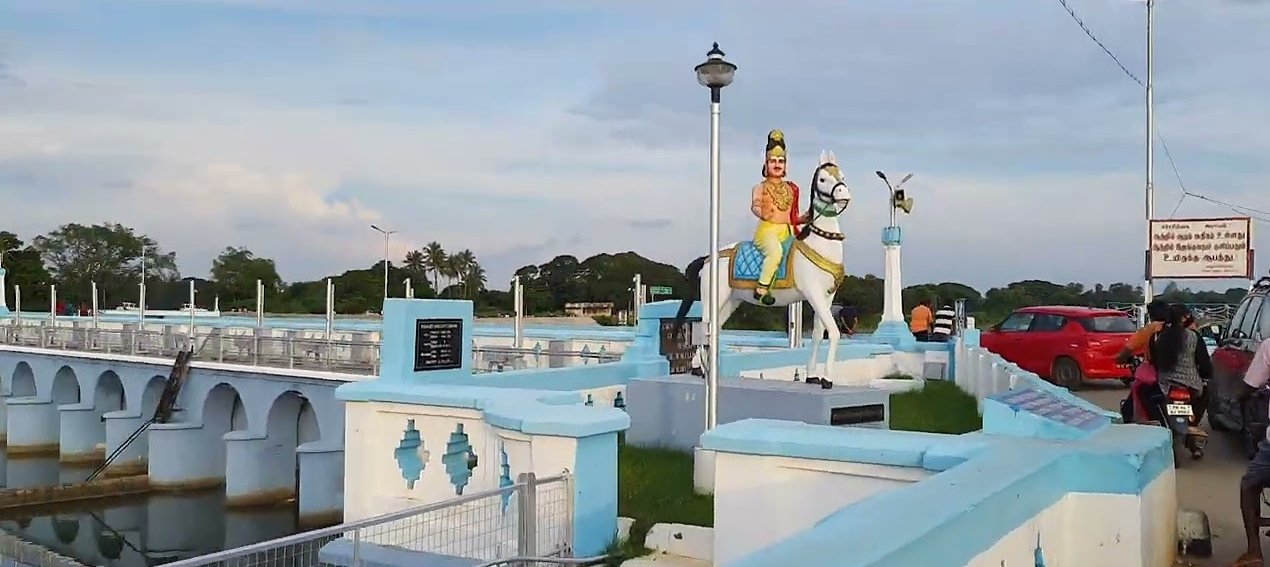
Kallanai Dam : The Ancient Wonder Still Shaping Modern Agriculture
INTRODUCTION
Kallanai dam, also known as Grand Anicut, is one of the oldest water-regulating structures in the world and the oldest dam in India that is still in use. It was built across the Kaveri River by the Chola king Karikala Chola around the 2nd century CE.
ABOUT KALLANAI DAM:
Length: Approximately 329 meters.
Width: Approximately 20 meters.
Height: About 5.4 meters.
Purpose: Divert river water for irrigation in the fertile Cauvery Delta region.
HISTORICAL BACKGROUND OF KALLANAI DAM
Kallanai is considered a masterpiece of ancient Indian hydraulic engineering. It has functioned for nearly 2,000 years and continues to support irrigation in the Kaveri delta. Over time, British engineers modified and improved parts of the system while preserving the Original structure.
SIGNIFICANCE OF ENGINEERING:
- Built using large, unhewn stone blocks without modern cement or machinery.
- Designed to regulate and divert river flow rather than completely block it, which contributed to its remarkable durability.
- Later engineers, including Sir Arthur Cotton, studied and adapted its principles for other irrigation projects in India.
WHY IT IS FAMOUS?
One of the oldest operational dams in the world.A symbol of the engineering excellence of the ancient chola civilization.Continuous benefits to agriculture across the Cauvery delta region.
LOCATION:
Kallanai Dam, about 15 km from Tiruchirappalli.
CONCLUSION
Kallanai stands as a symbol of Tamil Nadu’s rich heritage, engineering excellence, and sustainable water management, making it an important historical and tourist attraction.
